


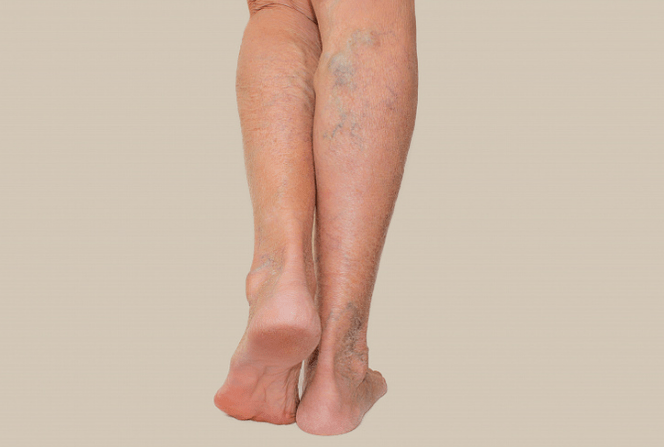
Varicose veins are a disease of venous channels characterized by blood circulation disorders and valve changes.The disease is accompanied by expansion of the walls and an increase in the length of the vessel.The disease causes stagnation of blood and the formation of a node.A doctor's consultation is required.
Symptoms of varicose veins
In the early stages of the disease, the size of 2-3 channels increases.No other symptoms.As varicose veins develop, the following symptoms develop:
- rapid fatigue of the lower extremities;
- swelling of the legs;
- feeling of heaviness;
- thickening of the venous channels on the surface of the skin;
- hair loss in the affected area;
- burning and itching;
- pain in the lower extremities;
- the formation of bleeding cracks with minor damage;
- dermatitis;
- redness along the venous channel.
- veins take on a dark blue color, nodules are formed;
- cramps in the lower extremities.
Reasons
The exact cause of the development of varicose veins cannot be determined.However, factors that increase the risk of developing the disease have been identified:
- genetic predisposition.It is explained by the transfer of a non-standard gene responsible for the structure of vascular channels.From the moment of birth, the child has a weakness of muscles and connective tissues, which causes increased pressure in the lower limbs;
- changes in hormonal levels, such as during pregnancy or menopause.The concentration of estrogen in the body decreases and the level of progesterone increases.This leads to a decrease in the tone of the venous wall and blockage of blood vessels;
- excess body weight provokes slow blood circulation, increased pressure in the abdominal area;
- high sugar concentration in blood vessels damages the walls of the channels, creating a favorable environment for the formation of blood clots;
- excessive consumption of alcoholic beverages causes thirst, thickens blood cells, forms blood clots and disrupts blood circulation;
- long-term physical activity in the lower extremities leads to a decrease in the tone of muscle tissue, blood flow to the heart system slows down, and stagnation occurs in the legs;
- congenital abnormalities in blood cell coagulation;
- an improperly prepared diet, low concentration of vitamins E and C lead to weakening of blood vessels;
- constant use of tight underwear provokes compression of venous channels;
- kidney diseases;
- chronic constipation.The disease causes an increase in intra-abdominal pressure, which causes a violation of blood flow;
- frequent use of high-heeled shoes, the muscle tissue of the lower leg does not move, causes stagnation;
- hot season, frequent dehydration thickens the blood, increases the risk of blood clots;
- diseases of the cardiovascular system, for example, heart failure;
- overdose of drugs that increase blood clotting;
- surgical interventions, blood loss during surgical treatment increases the risk of blood clots.
Stages of development of varicose veins
There are several stages of the development of varicose veins of the lower extremities:
- the initial stage lasts from several months to several years, regardless of the age of the patient.It is characterized by the absence of clear signs.It is accompanied by mild pain in the venous channels, a burning sensation and rapid fatigue of the legs.Painful sensations intensify in the evening;
- the second stage is characterized by the development of symptoms.It is accompanied by severe pain, constant spasms of muscle tissue, the formation of nodules in the legs, an increase in the thickness of veins and a feeling of itching;
- the third stage is characterized by increased edema, impaired blood circulation, ulcerative lesions that do not heal for a long time, and thrombophlebitis.
Varieties
Depending on the location, several types of varicose veins are distinguished:
Varicose veins in legs and arms
It is diagnosed more often than others and is easy to treat.
Varicose veins of the pelvis
It is characterized by symptoms similar to other diseases.The process of urination is disturbed, pain is possible during sexual intercourse or physical exercises.
Varicose veins of the uterus
It is rarely diagnosed, it is characterized by painful sensations during sexual intercourse, radiating to the lower back.
Varicose veins of the esophagus
More often - concomitant diseases of portal hypertension.It is characterized by the absence of symptoms.
Diagnostics
Diagnosis requires visual examination and medical history.Additional examinations show the condition of the valves and venous channels and allow to determine the type and stage of the disease.If necessary, the doctor prescribes functional tests to determine the patency of the vessels, ultrasound scan with duplex, venography, Dopplerography to assess blood flow.Use to diagnose varicose veins:
- MRI (magnetic resonance imaging)
- Check-up (comprehensive examination of the body)
- Computer electroencephalography
- Computer topography of the spine
- Duplex scanning
- Ultrasound (ultrasound examination)
- CT (computed tomography)
- Onco Check-up - free online consultation
Which doctor should I see?
If you suspect varicose veins, you should contact a phlebologist - a specialist who deals with blood vessels.You can also make an appointment with a surgeon, who will make a diagnosis and choose the appropriate treatment.
Treatment of varicose veins
The course of treatment depends on the individual characteristics of the disease.Medicines improve the function of valves, nourish the walls of vascular channels, stimulate blood flow, but cannot eliminate the disease.The patient's diet is adjusted, an individual daily regimen is drawn up, and the use of a compression garment is prescribed.Traditional methods help to get rid of pain.If the disease cannot be treated with conservative methods, surgical intervention is prescribed.The following methods are usually used:
- Manual therapy
- Physiotherapy
- Therapeutic massage
- Orthopedic insoles
- Reflexology
- Ozone therapy
- Plasma therapy
- SVF joint therapy
- Pharmacopuncture
Complications
- venous bleeding;
- eczema develops with prolonged lack of oxygen;
- superficial thrombophlebitis;
- formation of blood clots in deep venous channels;
- formation of trophic ulcers;
- infertility due to damage to the uterine vessels;
- death due to blood clots.
Prevention of varicose veins
To reduce the risk of developing varicose veins, the following rules should be followed:
- avoid intense physical activity in the lower extremities;
- use medicines according to the instructions;
- to refuse alcoholic beverages;
- when sitting, do small gymnastics once an hour;
- stop using tight underwear;
- maintain a balanced diet;
- Consult a doctor at the first signs of varicose veins.